 Image 1 of 3
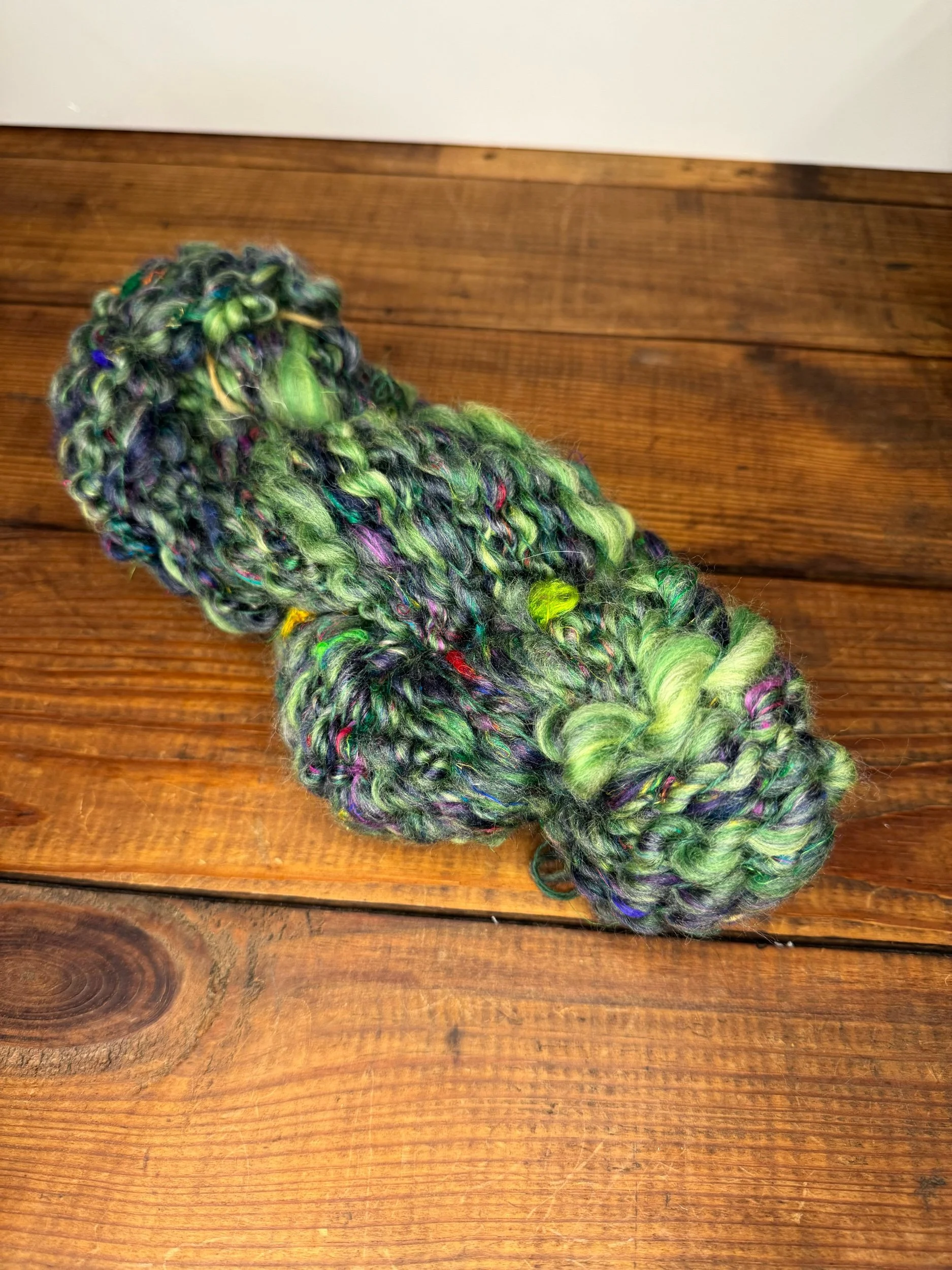 Image 2 of 3
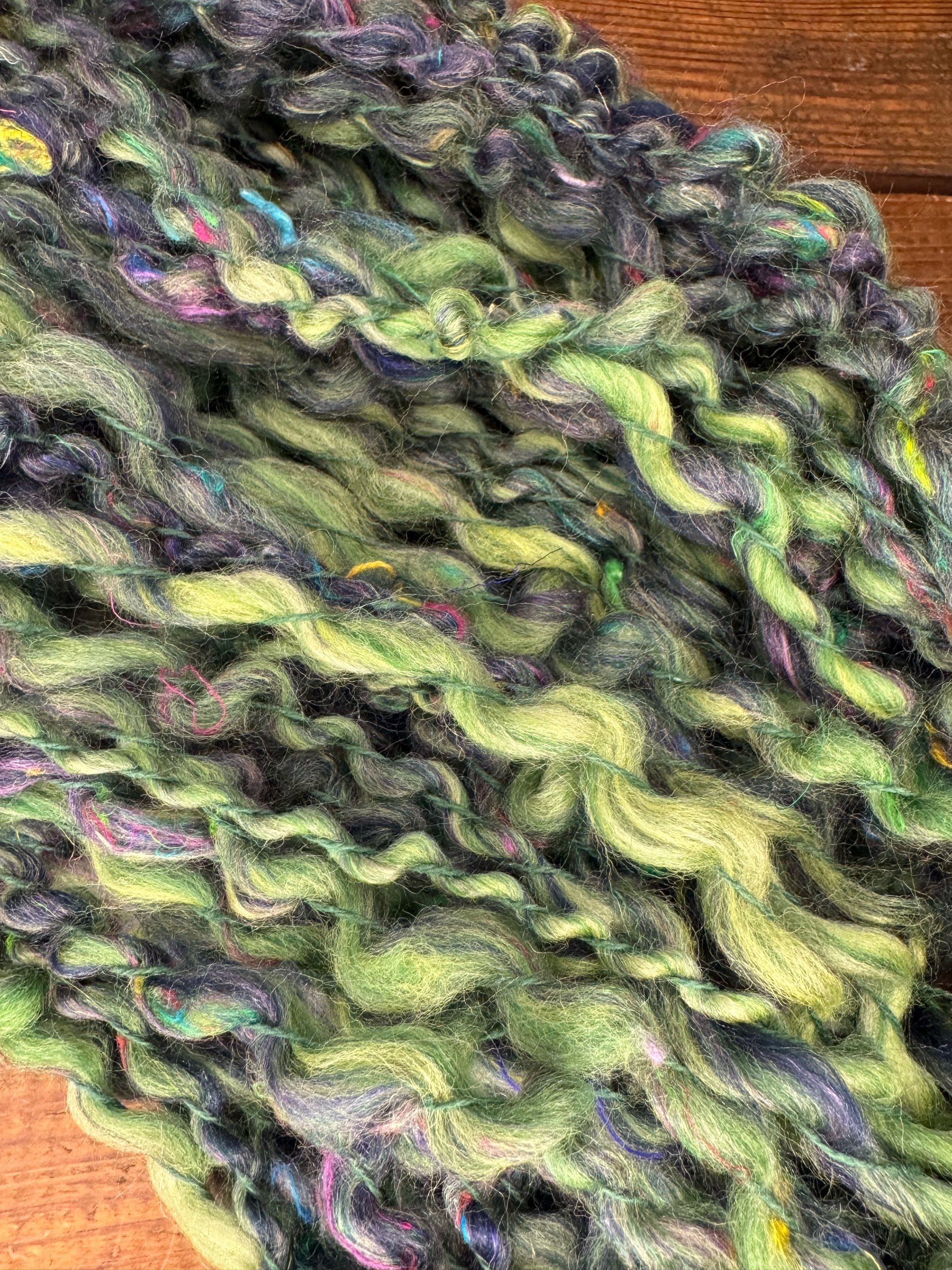 Image 3 of 3
Description
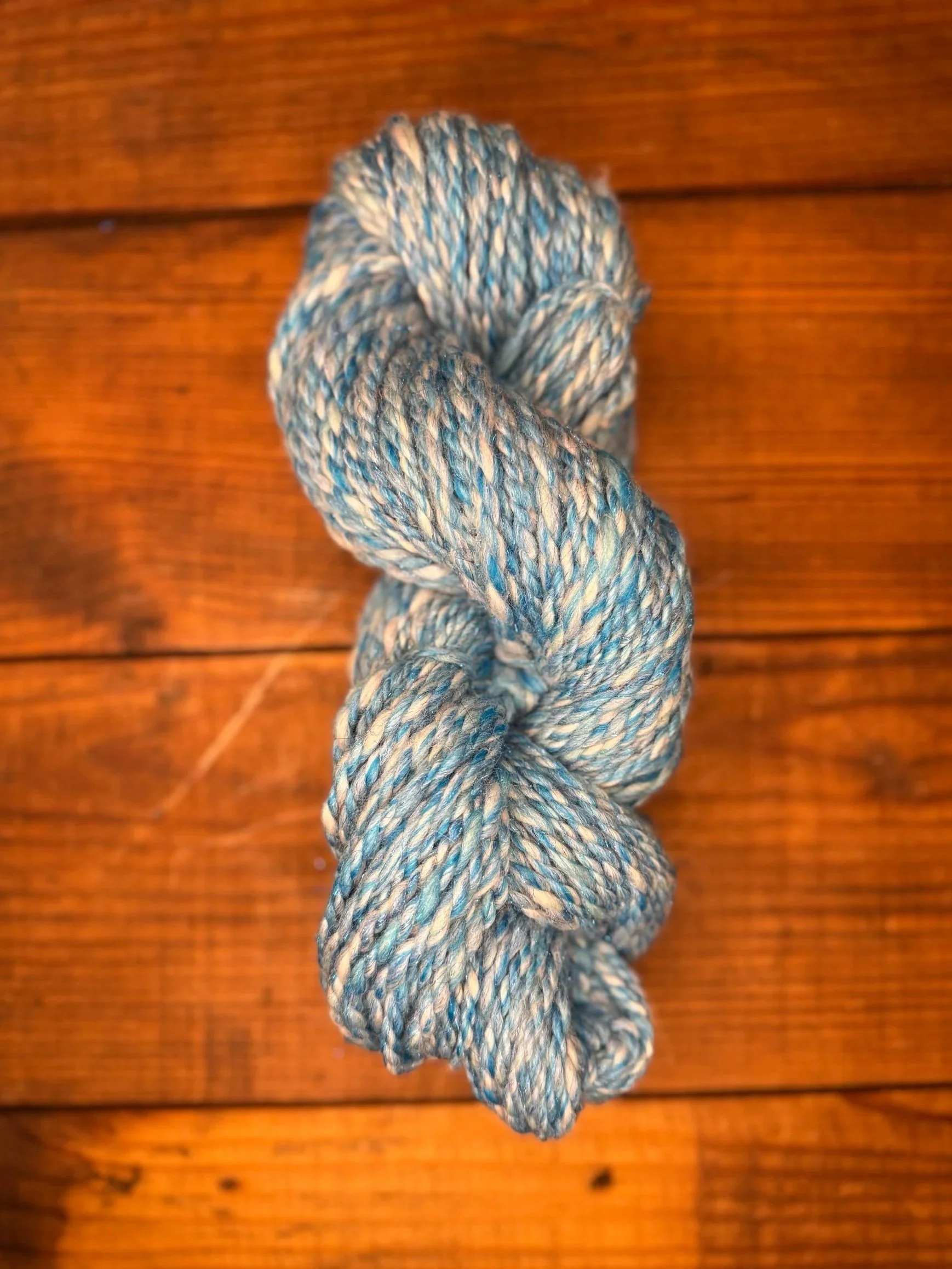
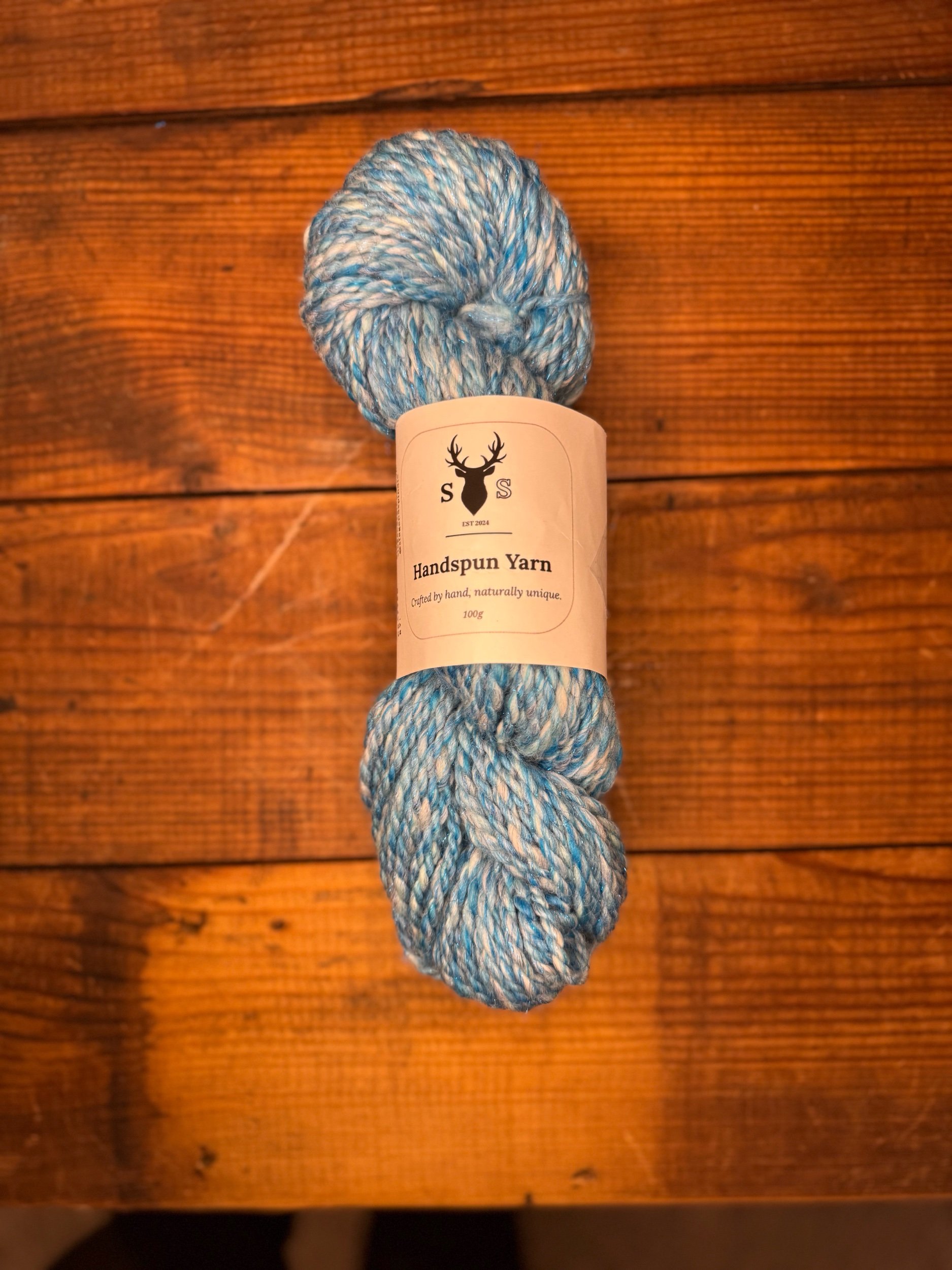
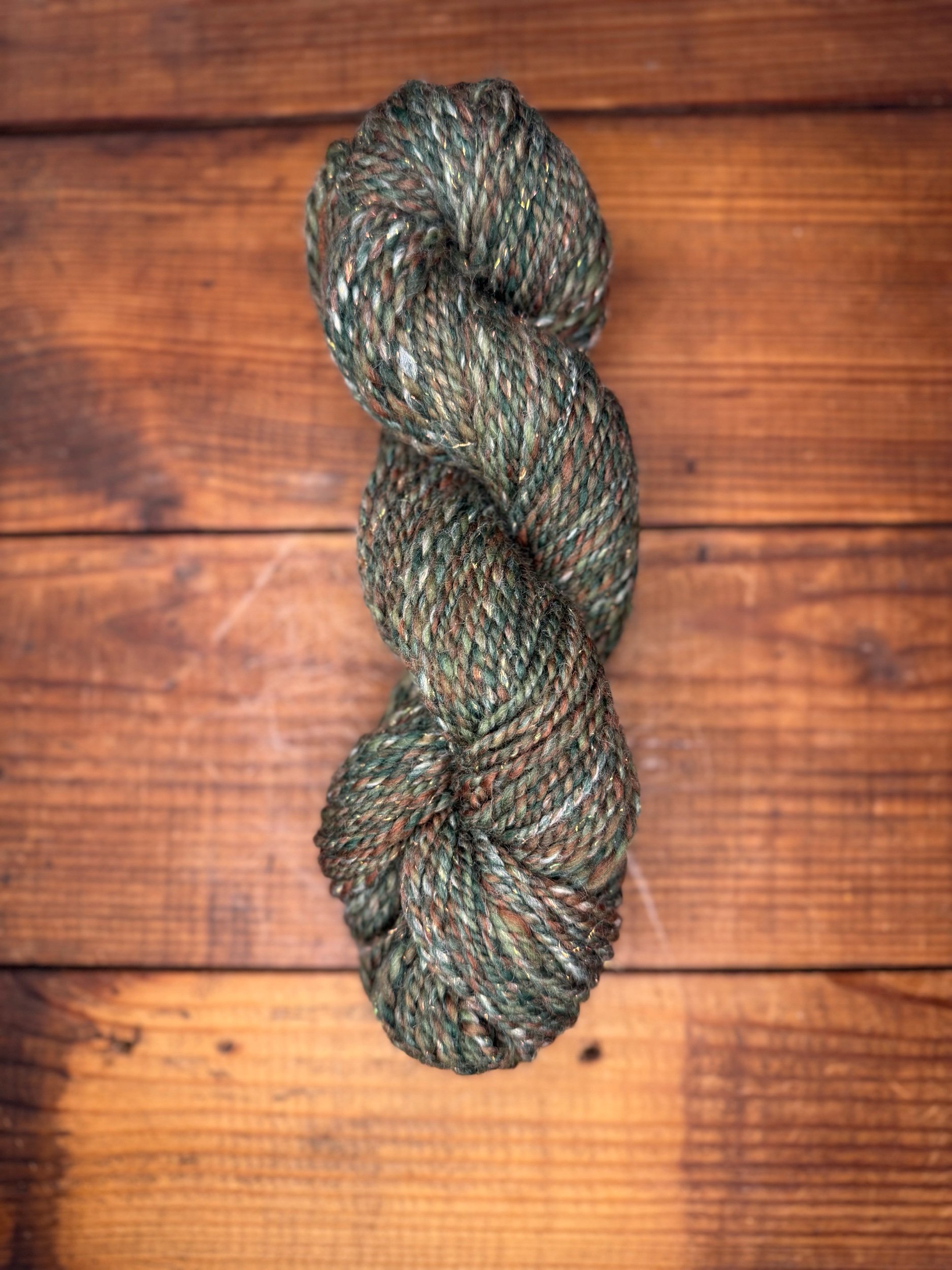
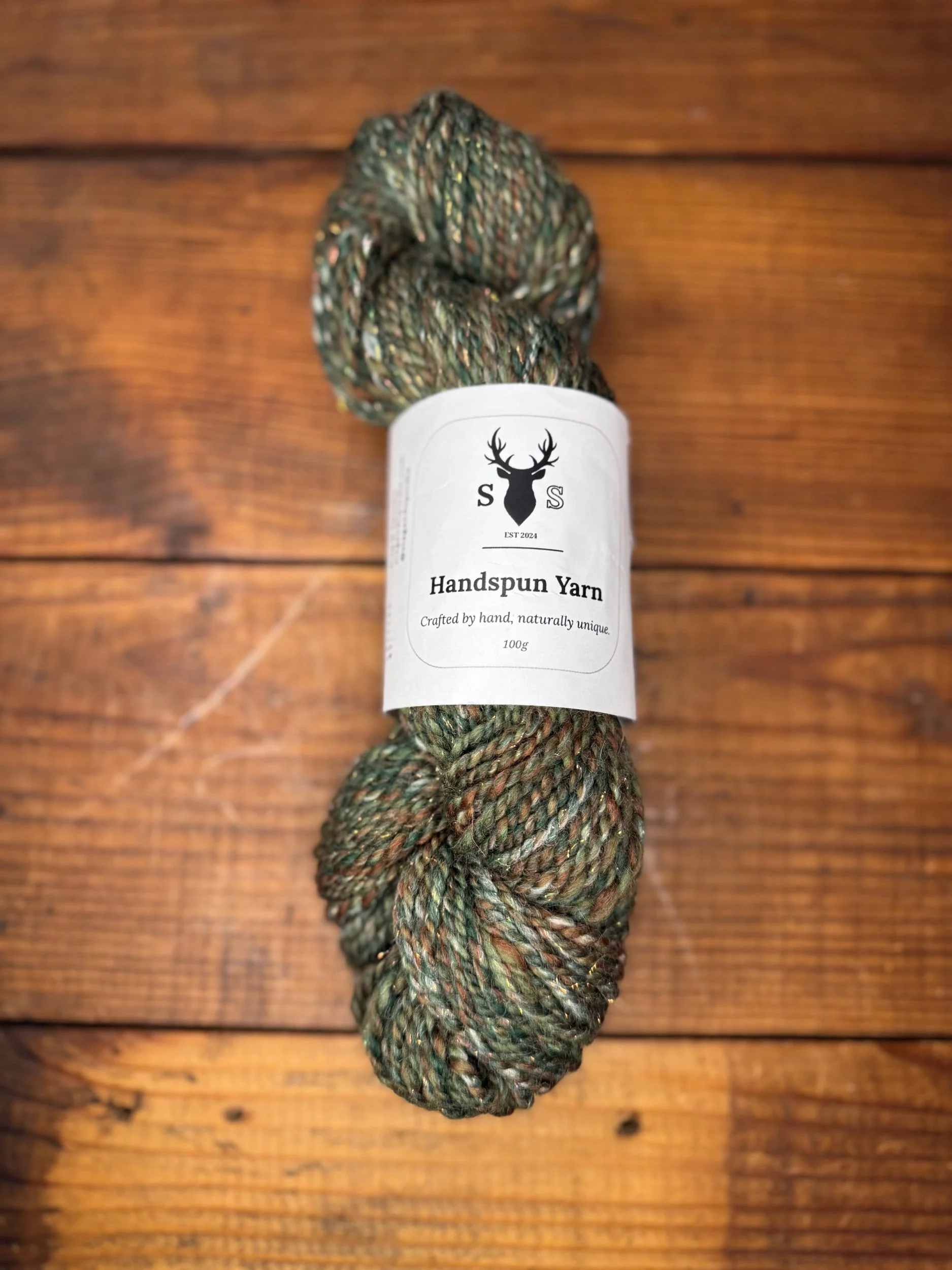
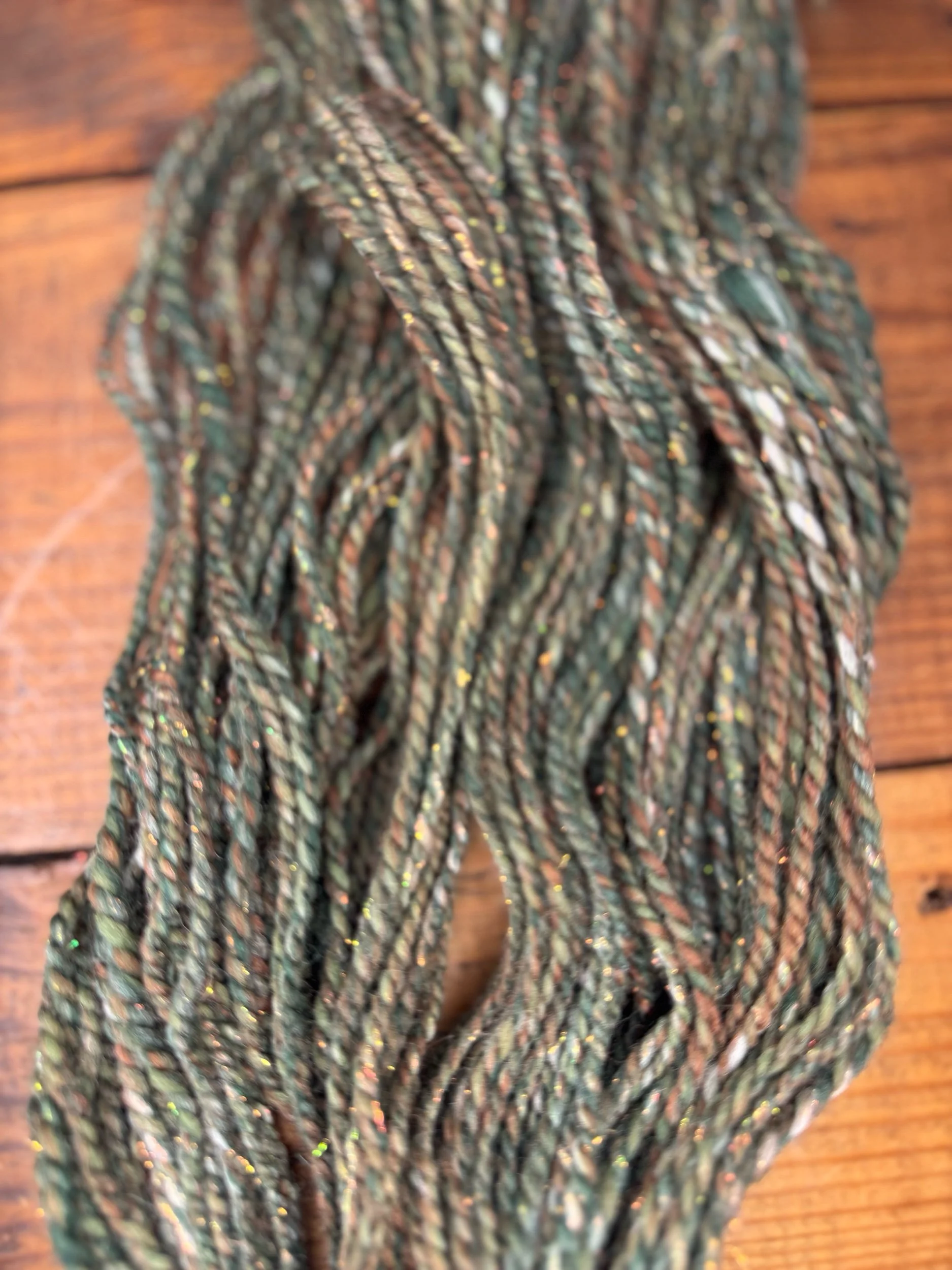
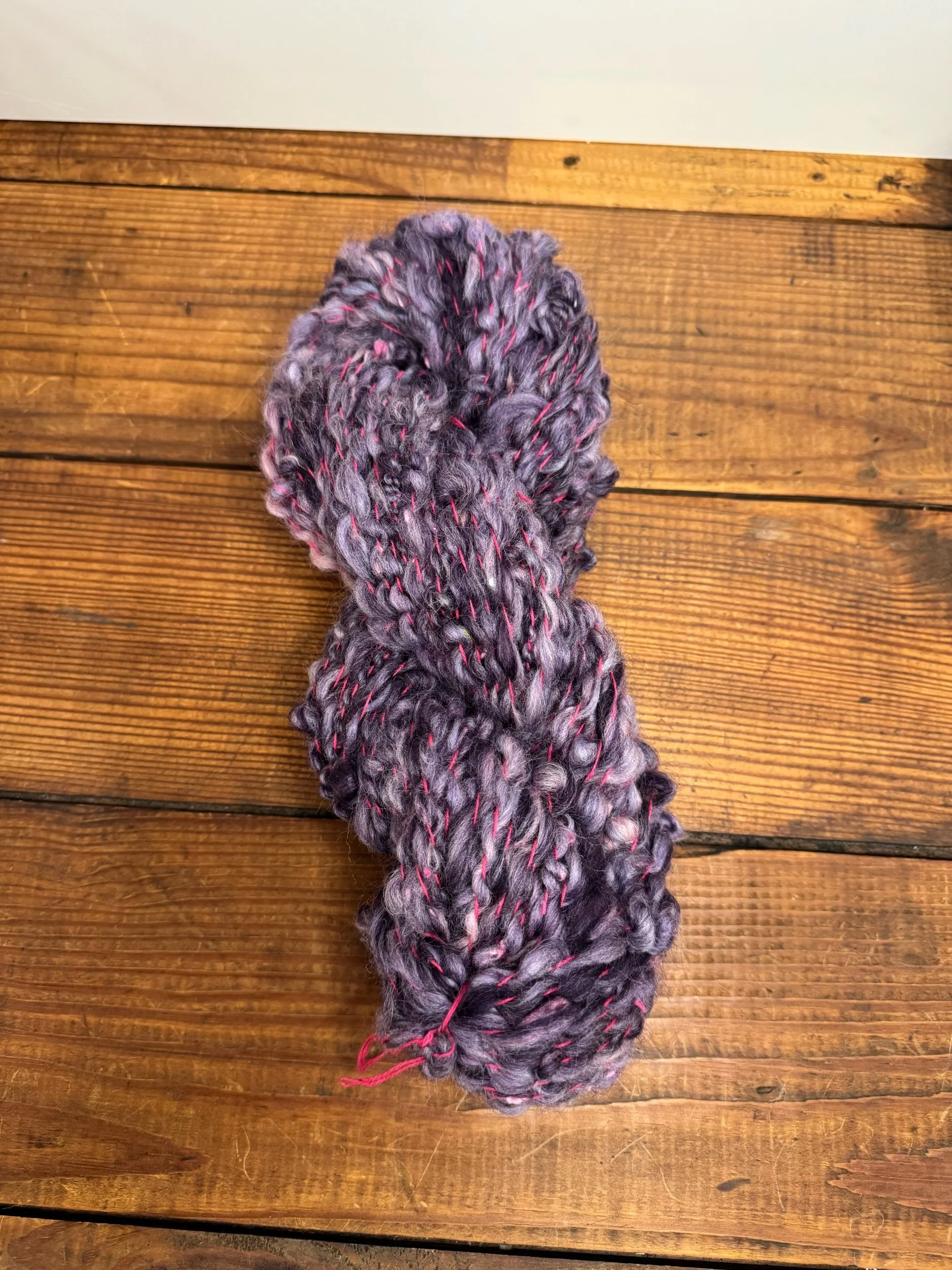
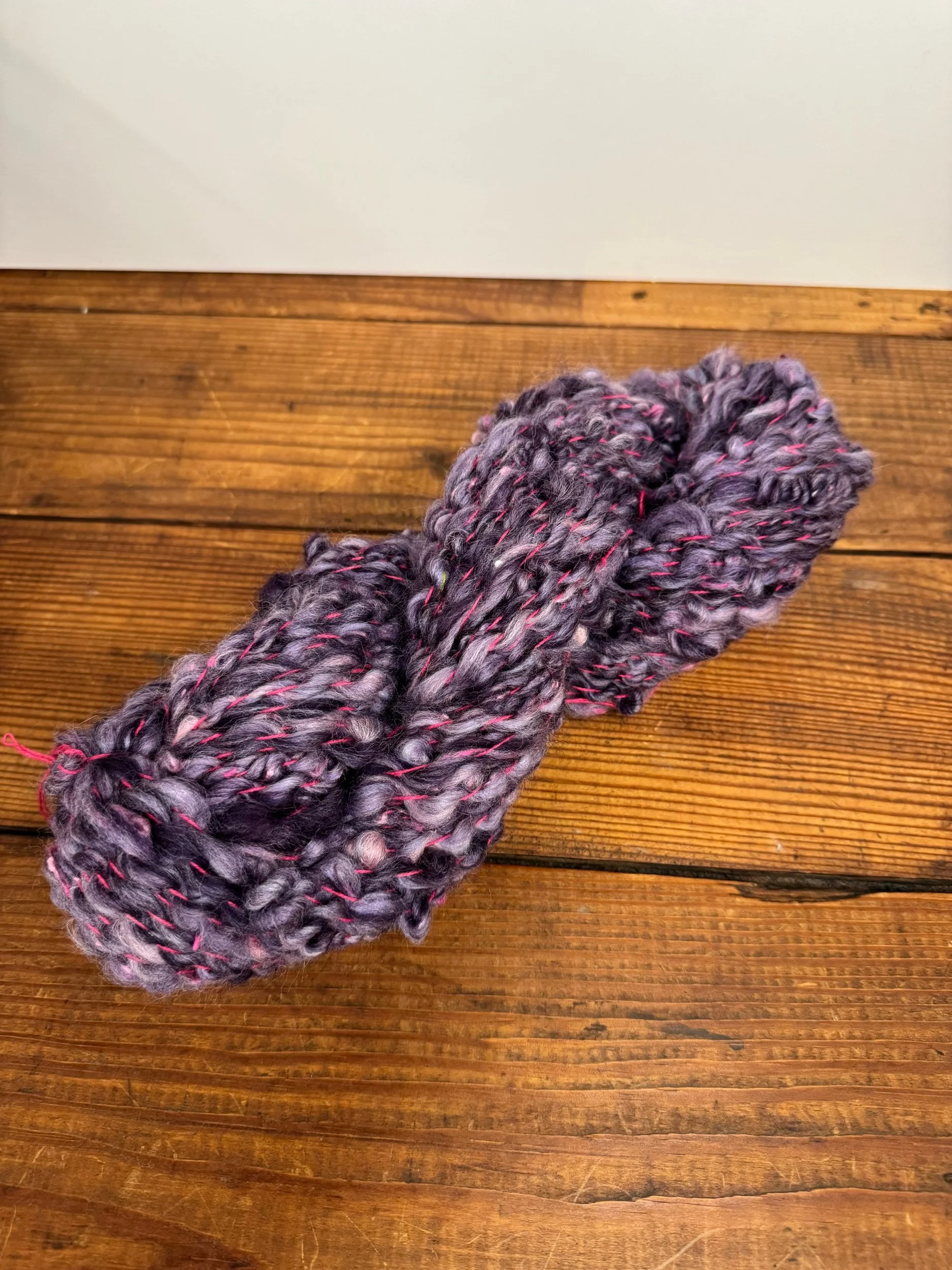
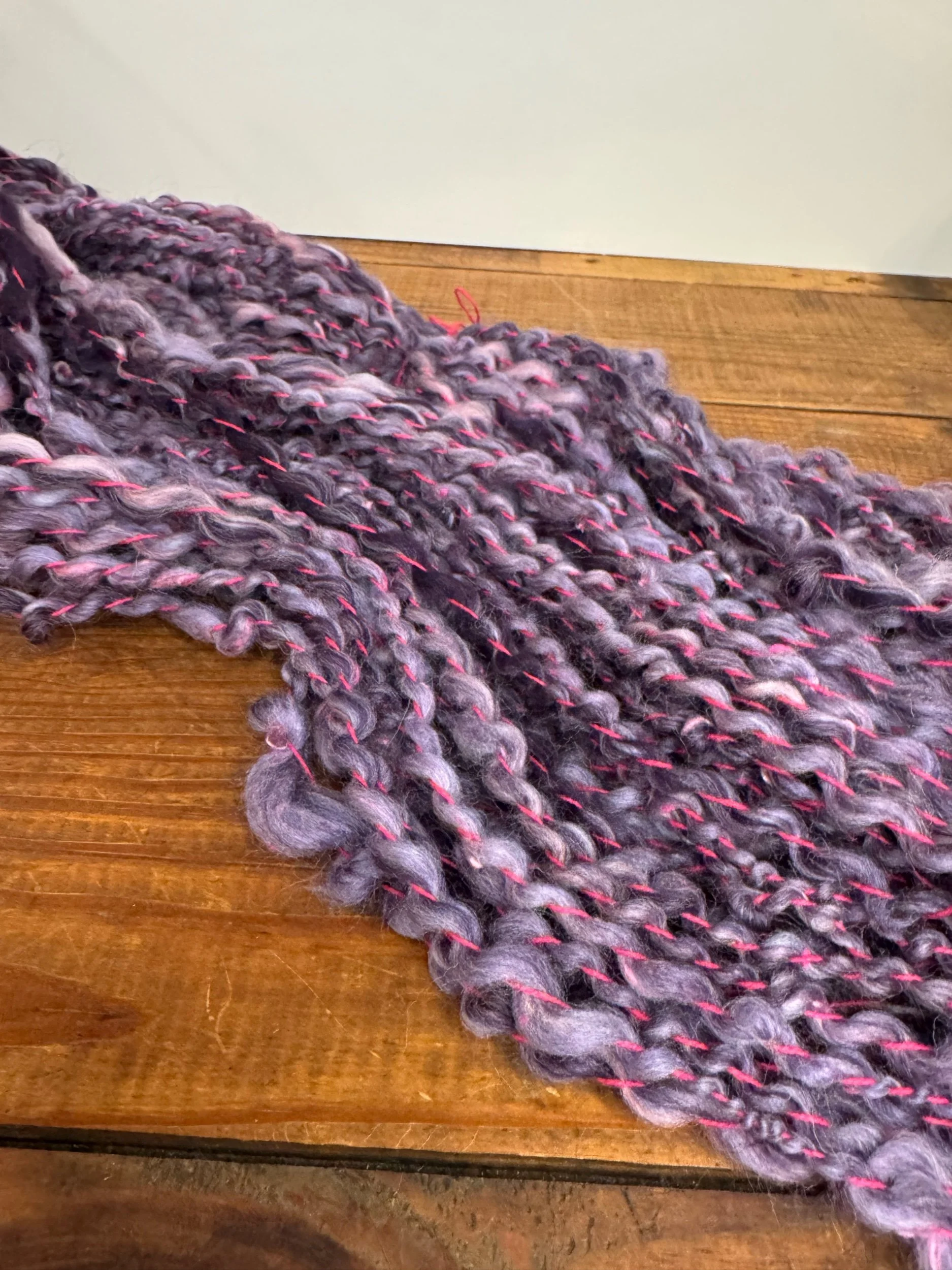
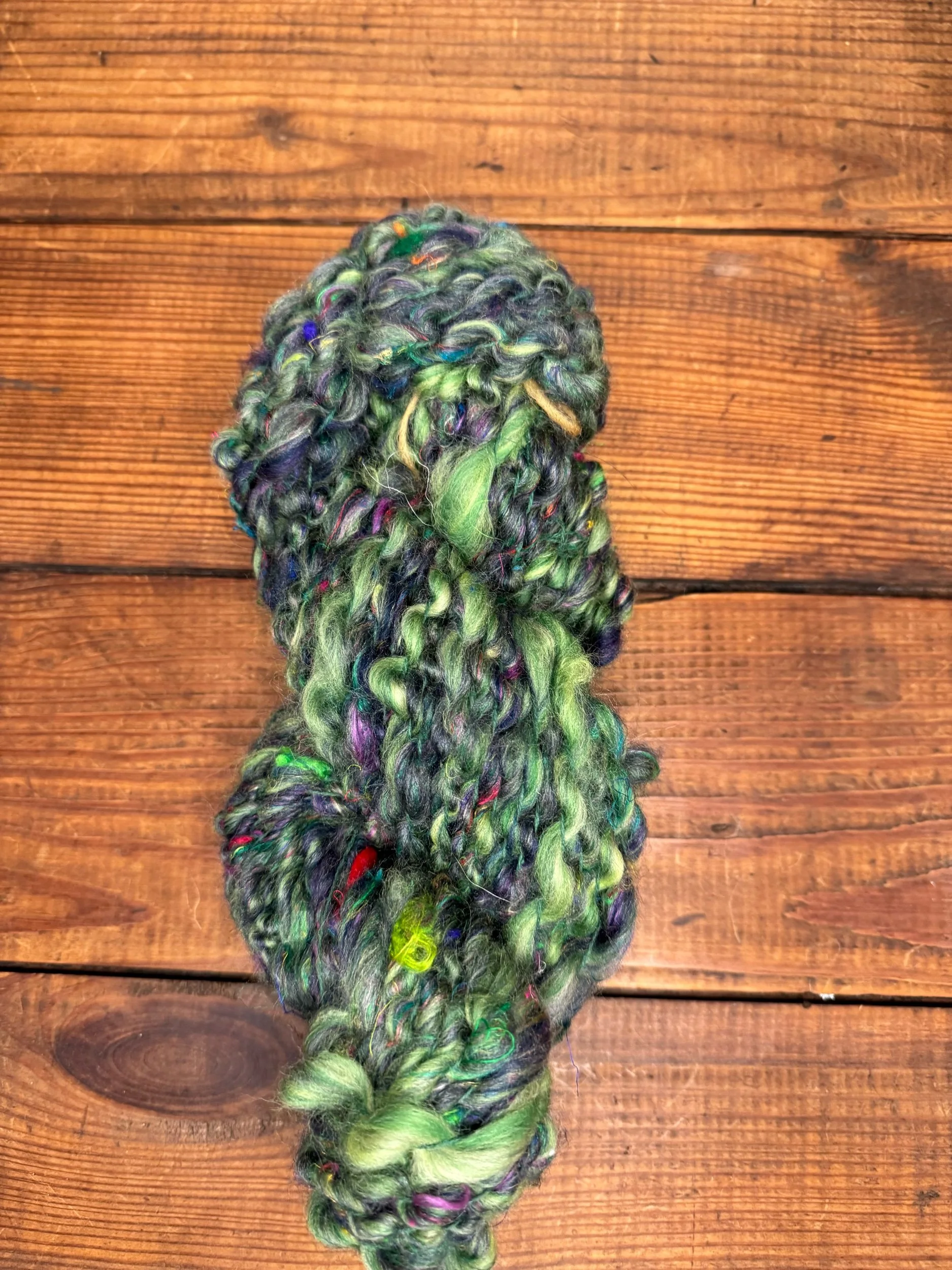
After the Tide settles into layered greens and deep blues, with sari silk drifting through the coils like light caught beneath the surface. There’s a sense of calm here—what remains once movement has passed.
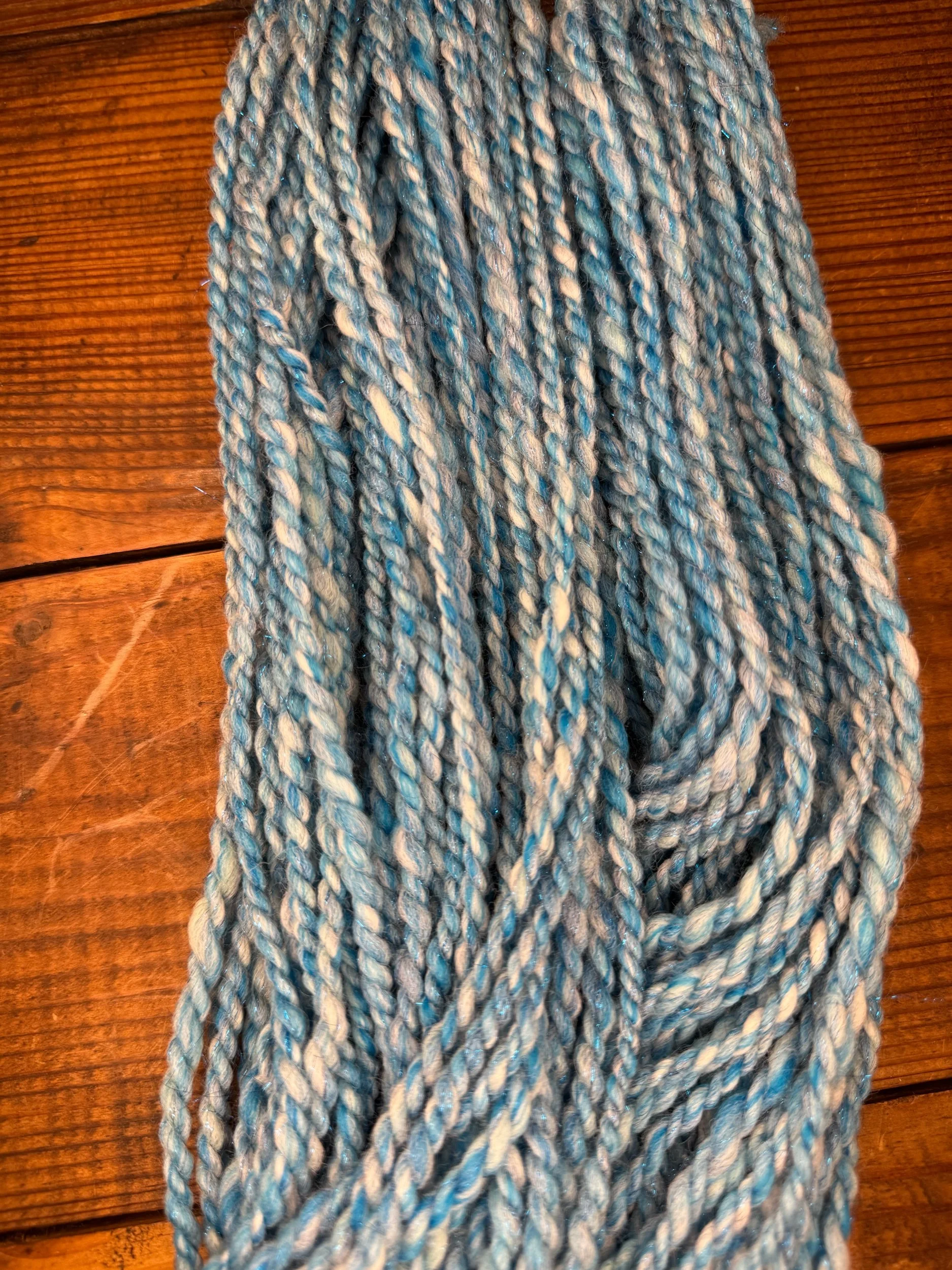
Soft merino and alpaca create loft and warmth, while mulberry and sari silk add subtle sheen and depth. Spun around a cotton core, this yarn is quietly expressive and designed for textured making. While the colorway can be revisited, each skein is shaped by the moment it was spun and remains one of a kind.
Fiber Content:
61% Merino
16.5% Alpaca
15% Mulberry Silk
7.5% Sari Silk
Trace nepps
Construction: Curled art yarn plied on a cotton thread
Weight: Super Bulky / Art Yarn
Yardage: Approx. 81 yards
Weight: Approx. 115 grams
Feel: Soft, lofty, with expressive texture and gentle sheen
Colorway: Deep greens and blues with sari silk texture
Repeatability: Colorway repeatable; each skein one of a kind
Knitting Needles: 8–10 mm (US 11–15)
Crochet Hook: K–M (6.5–9 mm)
(Many makers size up to let the coils fully bloom.)
Textured knitting and crochet
Statement or sculptural weaving
Accent yarn for trims, borders, and mixed-fiber projects
Hand wash gently in cool water with a mild wool wash. Do not agitate or wring. Gently squeeze out excess water and lay flat to dry. Avoid hanging, as the weight may stretch the coils. Natural movement in the coils over time is part of the yarn’s character.
Art yarn is designed to add texture, movement, and personality to your work—it doesn’t need to behave like traditional yarn to be useful.
This coil-style art yarn works best when allowed to take up space. Use slightly larger tools to let the curls bloom, or pair it with a smoother yarn as an accent to create contrast. It can be worked on its own for bold texture or woven, stitched, or carried along with another yarn to add depth and visual interest.
Art yarn is especially well-suited for:
Statement hats and accessories
Textured knitting or crochet details
Sculptural or wall weaving
Borders, trims, and mixed-fiber projects
There’s no single “right” way to use art yarn—experimentation is part of the process. Let the yarn guide you, and enjoy the unexpected moments that emerge as you work.
Description
After the Tide settles into layered greens and deep blues, with sari silk drifting through the coils like light caught beneath the surface. There’s a sense of calm here—what remains once movement has passed.
Soft merino and alpaca create loft and warmth, while mulberry and sari silk add subtle sheen and depth. Spun around a cotton core, this yarn is quietly expressive and designed for textured making. While the colorway can be revisited, each skein is shaped by the moment it was spun and remains one of a kind.
Fiber Content:
61% Merino
16.5% Alpaca
15% Mulberry Silk
7.5% Sari Silk
Trace nepps
Construction: Curled art yarn plied on a cotton thread
Weight: Super Bulky / Art Yarn
Yardage: Approx. 81 yards
Weight: Approx. 115 grams
Feel: Soft, lofty, with expressive texture and gentle sheen
Colorway: Deep greens and blues with sari silk texture
Repeatability: Colorway repeatable; each skein one of a kind
Knitting Needles: 8–10 mm (US 11–15)
Crochet Hook: K–M (6.5–9 mm)
(Many makers size up to let the coils fully bloom.)
Textured knitting and crochet
Statement or sculptural weaving
Accent yarn for trims, borders, and mixed-fiber projects
Hand wash gently in cool water with a mild wool wash. Do not agitate or wring. Gently squeeze out excess water and lay flat to dry. Avoid hanging, as the weight may stretch the coils. Natural movement in the coils over time is part of the yarn’s character.
Art yarn is designed to add texture, movement, and personality to your work—it doesn’t need to behave like traditional yarn to be useful.
This coil-style art yarn works best when allowed to take up space. Use slightly larger tools to let the curls bloom, or pair it with a smoother yarn as an accent to create contrast. It can be worked on its own for bold texture or woven, stitched, or carried along with another yarn to add depth and visual interest.
Art yarn is especially well-suited for:
Statement hats and accessories
Textured knitting or crochet details
Sculptural or wall weaving
Borders, trims, and mixed-fiber projects
There’s no single “right” way to use art yarn—experimentation is part of the process. Let the yarn guide you, and enjoy the unexpected moments that emerge as you work.